
The Feast of St Francis
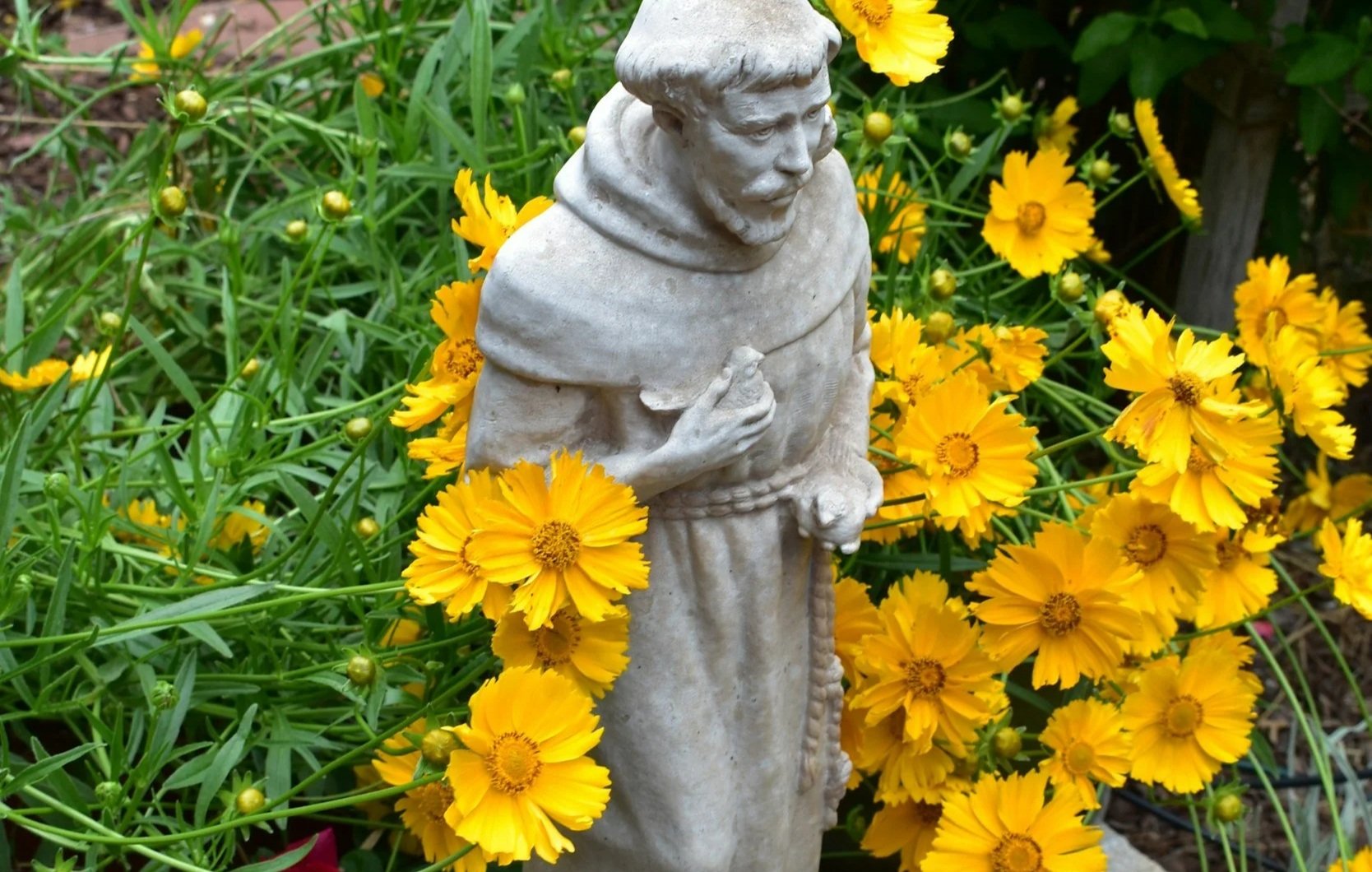
“Love all God’s creation, the whole of it and every grain of sand. Love every leaf, every ray of God’s light! Love the animals, love the plants, love everything.”
—Fyodor Dostoyevsky
This Sunday’s readings ask us to receive life as gift and trust, rather than a possession. The commandments give a liberated people limits that protect right relationship. The psalmist hears the heavens declaring God’s glory. Paul releases his claims to status and achievement in order to become more fully available to Christ. In Jesus’ parable, the tenants bring violence upon the vineyard because they have forgotten that it was entrusted to their care and was never theirs to possess.
On St Francis’ Day, these readings remind us that Christian love cannot be confined to human relationships. Francis addressed the sun, moon, water, earth and animals as kin because he understood all creatures to belong within one community of divine generosity. To love God is to cherish what God loves—not only creation as an inspiring idea, but this animal, this tree, this waterway and this patch of earth.
Rowland Hill once observed, “A person is not a true Christian if their dog or cat are not the better for it.” The test is practical. Does our faith make life better for the creatures and places entrusted to us? Does it teach restraint, tenderness and kinship? What would change if every creature and place touched by our lives were to become better for our having followed Christ?
Reflecting with the Lectionary
Exodus 20.1–4, 7–9, 12–20: The commandments are given to a people newly liberated from slavery, teaching them how to live freely without reproducing the domination from which they have escaped. The commandments establish life-giving limits around worship, work, family, truth, property and desire. Freedom depends upon protecting relationship with God, neighbour and creation. Sabbath reminds us that neither people, animals nor land exist only for labour and production. What life-giving limit might help you resist constant consumption and make room for rest, relationship and the flourishing of creation?
Psalm 19 The psalm celebrates two forms of divine revelation: the wordless testimony of the heavens and the life-giving wisdom of God’s law. Both draw the human heart towards wonder, wisdom and integrity. The sacred is disclosed through both the created world and the wisdom that teaches us how to live within it. To attend deeply to creation is to hear a testimony that is spoken without words yet reaches throughout the earth. What is the sky, land or living world revealing to you about wonder, relationship and the life you are being called to live?
Philippians 3.4b–14 Paul names the status and achievements that once defined him, then declares them secondary to knowing and sharing in Christ’s life. Rather than claiming to have arrived, he continues moving towards the life to which God has called him. Transformation begins when we loosen our hold on the identities, achievements and certainties that give us status or security. Faith is not possession of the truth but an ongoing apprenticeship in the self-giving way of Christ. What might you need to release so that you can become more fully available to the life and love of Christ?
Matthew 21.33–46 Jesus tells of tenants who forget that the vineyard has been entrusted to them and violently reject every attempt by its owner to receive its fruit. In trying to possess what was never theirs, they reject even the owner’s son—the stone that will nevertheless become the cornerstone. The vineyard—like the earth and all life within it—is gift and trust, not possession. God’s reign confronts every system that hoards the fruits of creation, excludes others from its abundance or treats entrusted life as private property. How would our choices change if we received the land, resources and communities in our care as gifts entrusted to us rather than possessions belonging to us?
Intercessions
Let us pray to the God who created all things in love and calls us into communion with one another and with the whole living world.
The response to “God of all Creation” is “Teach us your way of peace.”
God of all creation,
you speak through the beauty of earth and sea, the movement of wind and water, and the lives of every creature. Awaken us to the sacredness of the world around us, and teach us to receive creation as gift and trust, never merely as possession. God of all creation, teach us your way of peace.
We give thanks for Francis, whose life proclaimed kinship with the poor, the forgotten and the more-than-human world. Give your Church the courage to live simply, love generously and embody the Gospel through humility, tenderness and joy. God of all creation, teach us your way of peace.
We pray for this land and its First Peoples, especially the Jagera and Turrbal peoples, whose custodianship and care continue across generations. Grant us humility to listen, courage to seek justice, and wisdom to protect the lands and waters entrusted to us. God of all creation, teach us your way of peace.
We pray for the earth: for threatened species, damaged habitats, polluted waterways and places wounded by fire, flood and drought. Guide governments, industries and communities in the work of restoration, and help us accept the limits that allow the whole community of life to flourish. God of all creation, teach us your way of peace.
We pray for all animals: those who share our homes, those who labour beside human beings, those raised for food, and those who live beyond our sight. Where creatures suffer through cruelty, neglect or habitat loss, change human hearts and make us gentle guardians of their life and joy. God of all creation, teach us your way of peace.
Make us instruments of your peace in a world wounded by war, division and fear. Where there is hatred, teach us love; where there is injury, make us agents of healing; and where people are displaced, hungry or without safety, move us from compassion to practical solidarity. God of all creation, teach us your way of peace.
We pray for all who are sick, grieving, anxious, lonely or exhausted, especially those known to us and those we name now in silence. [Silence] Surround them with your compassion, and make us attentive companions in their need. God of all creation, teach us your way of peace.
We remember those who have died, giving thanks for the love we received through them and for all in them that was good and life-giving. With Francis and all your saints, bring them into the peace of your eternal communion. God of all creation, teach us your way of peace.
God of boundless love,
make us faithful members of your household of creation.
May our worship become wonder,
our gratitude become restraint,
our compassion become action,
and our lives become instruments of your peace.